
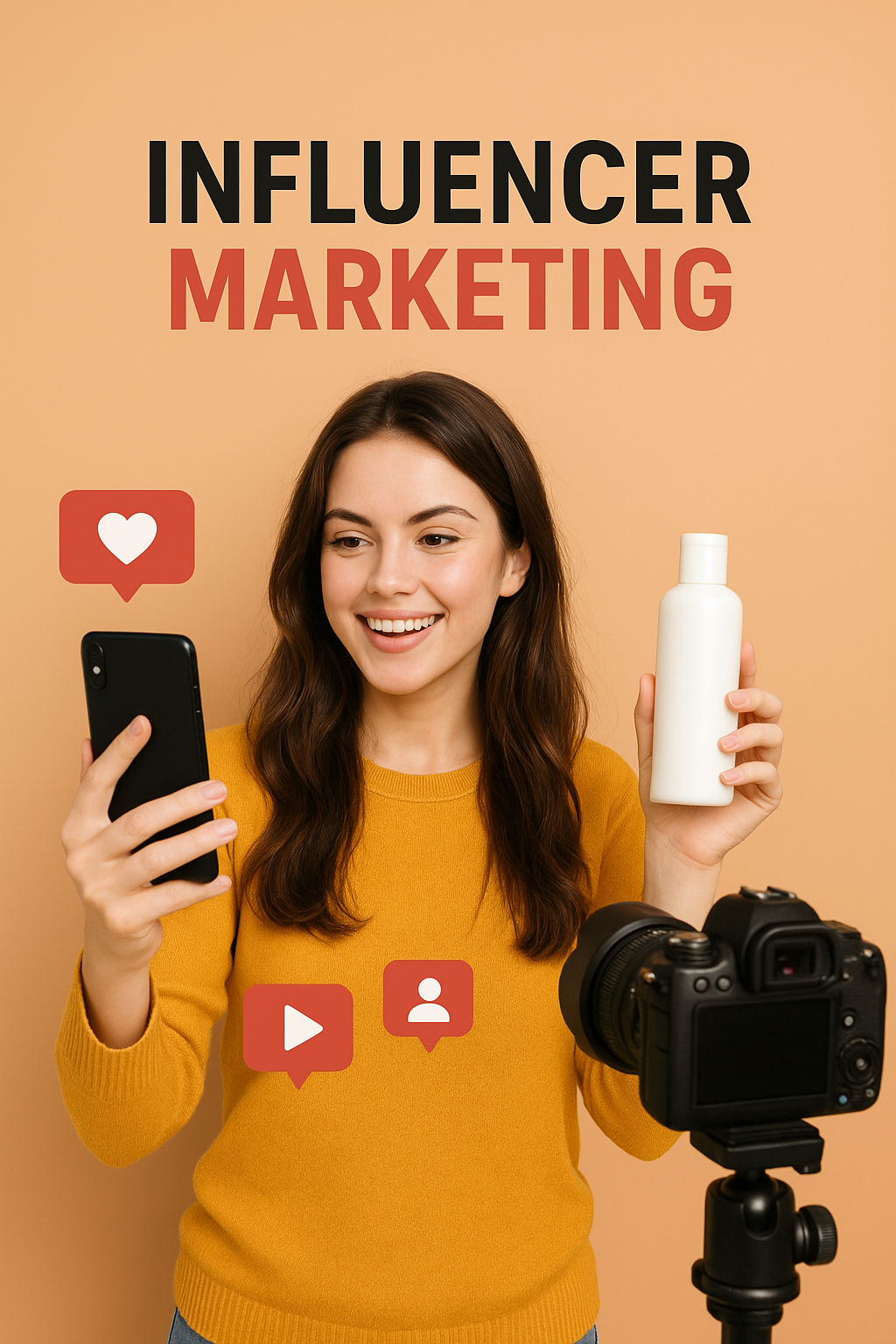
Overview — What is Influencer Marketing?
Influencer marketing is a digital marketing strategy in which brands collaborate with creators who have an established audience to promote products or services. Instead of relying only on traditional advertising channels, brands partner directly with individuals who already have credibility and attention within a target community.
At its core, influencer marketing leverages three key assets that creators bring:
- Reach: access to followers and viewers across platforms such as Instagram, YouTube, TikTok and blogs;
- Trust: a creator’s audience often trusts their recommendations more than a brand advertisement;
- Creative Voice: creators produce content that fits the platform and audience—making brand messages feel organic and less disruptive.
This approach can be used for many goals: driving awareness, amplifying product launches, increasing direct conversions, generating user-generated content (UGC), or even improving brand perception. Influencer marketing ranges from one-time sponsored posts to long-term ambassador partnerships and can involve paid fees, free product exchanges, affiliate commissions, or blended compensation models.
Key characteristics that differentiate influencer marketing from traditional advertising include:
- Person-driven storytelling rather than corporate messaging.
- Platform-native formats (short-form video, live streams, reels, long-form reviews).
- Higher emphasis on authenticity and creative freedom given to creators.
In the sections that follow, we’ll dive deeper into the types of influencers, the benefits and risks, step-by-step campaign setup, metrics to track, common challenges, operational best practices, and where the space is heading.
Types of Influencers — Tiers, Niches and Platforms
Influencers are often categorized by audience size, content niche, and platform. Each category suits different brand objectives and budgets. Understanding these types helps you select the most effective partners for a campaign.
By follower size (common tiers)
- Nano-influencers (1K–10K): highly niche, close-knit audiences, strong trust; best for hyper-local or community-focused activations.
- Micro-influencers (10K–100K): specialized audiences, solid engagement rates, cost-effective for many brands.
- Macro-influencers (100K–1M): broader reach and professional content; suitable for brand awareness and scalable campaigns.
- Mega/celebrity influencers (1M+): mass reach and star power; expensive but can create immediate awareness at scale.
By content niche
Influencers also specialize by topic: beauty, fashion, tech, fitness, food, travel, parenting, gaming, finance, education, B2B, and more. The right niche ensures relevance: a fitness supplement should be promoted by fitness or health creators, not by unrelated categories.
By platform and format
Different platforms support different formats and audience expectations:
- Instagram: posts, carousels, stories, reels — good for visual lifestyle brands.
- YouTube: long-form reviews, tutorials, and unboxings — favorable for in-depth product demos and trust-building.
- TikTok: short-form, trend-driven content with viral potential; great for discovery and young demographics.
- Blogs & Podcasts: long-form educational content, SEO benefits, and durable evergreen exposure.
Choosing the right tier, niche, and platform is a balance between target audience, campaign goals, content type, and budget. The following sections explain why these choices matter and how to structure campaigns accordingly.
Benefits of Influencer Marketing
Influencer marketing offers measurable advantages that many brands find compelling compared to some traditional media channels. Below we elaborate on the main benefits and why they matter.
1. Authentic Reach and Trust
Influencers communicate with an audience that has chosen to follow them. That audience expects content from the creator and often places trust in the creator’s opinions. When a creator genuinely likes or uses a product, the recommendation feels personal and authentic — which can translate into higher conversion intent than standard display ads. This trusted context is especially important for niche products where expert recommendations sway buying decisions.
2. Highly Targeted Audiences
Unlike broad advertising, influencer partnerships allow brands to tap into specific communities. For example, a brand selling plant-based protein can collaborate with vegan fitness creators who already reach a relevant audience. This targeting reduces wasted impressions and improves cost-efficiency because content is placed directly in front of people likely to care.
3. Creative, Platform-Native Content
Creators produce content that matches platform norms — whether that’s a 60-second TikTok, a carousel post on Instagram, or a deep-dive YouTube review. These native formats often perform better because they align with user expectations and consumption behavior. Brands benefit from creative storytelling that can be reused across channels as UGC or paid assets.
4. Scalability & Flexibility
Campaigns can be scaled by recruiting more creators, running staggered activations, or amplifying creator posts through paid media. Compensation models vary (flat fees, product exchange, affiliate commissions), enabling brands to run one-off experiments or long-term partnerships depending on budget and objectives.
5. Performance & Measurement
Modern tracking—UTM links, promo codes, affiliate tracking, and platform insights—allows brands to measure direct outcomes (clicks, sales) and softer metrics (engagement, sentiment). When combined with A/B testing and controlled launch windows, influencer campaigns can provide clear ROI and learnings for future activations.
6. SEO & Long-Term Content Value
Long-form content like blog posts and YouTube videos remains discoverable long after a campaign ends. This evergreen content drives traffic, backlinks, and search visibility for the brand. Creators who host product reviews or tutorials can therefore provide sustained, cumulative value beyond the initial posting window.
How to Run an Influencer Campaign — Step by Step
Running a successful influencer campaign involves careful planning, clear communication, and precise measurement. Below is a practical step-by-step approach that brands and creators can follow.
Step 1 — Define Clear Objectives
Start by deciding what success looks like. Objectives often include:
- Brand awareness (reach, impressions)
- Engagement (likes, comments, saves)
- Traffic (click-throughs to product pages)
- Conversions (sales, sign-ups, downloads)
- Content generation (UGC for reuse)
Each objective implies different influencer types, formats, and KPIs.
Step 2 — Identify Target Audience & Platforms
Define demographics, behaviors, and platforms where your audience spends time. A youth-focused brand may prioritize TikTok; a tech product may perform best with YouTube reviews. Use audience personas to pick creators whose followers align with your profile.
Step 3 — Find & Vet Influencers
Search for creators using discovery tools, platform search, or networks. Vet candidates by:
- Checking engagement rates (likes+comments divided by followers)
- Reviewing content quality and voice consistency
- Examining audience comments for relevance/authenticity
- Spotting suspicious follower patterns (sudden spikes)
Ask for media kits and previous campaign case studies when possible.
Step 4 — Build the Campaign Brief
A clear brief saves time and sets expectations. Include:
- Campaign objective and timeline
- Key messages, hashtags, and CTAs
- Deliverables (post types, number of videos/stories)
- Usage rights for created content
- Compensation and payment terms
- Reporting requirements and analytics access
Step 5 — Negotiate & Execute
Agree on content creative control, schedule, and approval flow. Allow creators creative freedom while ensuring brand safety. Deliver any samples, product, or talking points on time.
Step 6 — Monitor & Optimize
Track KPIs in real time, and be prepared to optimize: boost top-performing posts, adjust creatives, or iterate messaging across creators.
Step 7 — Measure & Learn
After the campaign, analyze performance against objectives. Document learnings—what creative worked, which creators delivered best ROI, and what audience segments converted. Use this insight to refine future activations.
Measuring ROI and Key Metrics
Measurement turns creative activity into business insight. Choose metrics that map directly to your campaign objectives and use tracking tools to capture results reliably.
Common Metrics by Objective
- Awareness: impressions, reach, view-through rate, follower growth
- Engagement: likes, comments, saves, shares, engagement rate
- Traffic: clicks, sessions, bounce rate, time on page
- Conversions: promo-code redemptions, sales, sign-ups, conversion rate, revenue per click
- Content Value: number of UGC assets, repurpose rate, and content licensing usage
Tracking Methods
- UTM parameters: append links with UTM tags to measure traffic sources in analytics platforms.
- Promo codes & affiliate links: unique codes for each influencer make attribution straightforward.
- Platform analytics: use native insights from Instagram, TikTok, and YouTube for engagement and reach data.
- Commerce platform data: connect e-commerce platforms to identify uplift in sales during campaign windows.
Calculating ROI
ROI can be calculated simply as (Revenue from campaign − Cost of campaign) ÷ Cost of campaign. But accurate revenue attribution requires careful tracking and consideration of long-term impact (e.g., new customers acquired may purchase later). It’s common to calculate both short-term direct ROI and longer-term value metrics such as Customer Lifetime Value (LTV) of customers acquired via influencers.
Advanced measurement approaches
For larger campaigns, consider lift studies or holdout groups: run the campaign in one region or audience and compare results to a control group. This isolates the incremental impact of the influencer activity and provides a more rigorous estimate of causal effect than simple before-after comparisons.
Challenges, Risks, and Common Pitfalls
While influencer marketing is powerful, it’s not risk-free. Understanding common pitfalls helps brands and creators avoid wasted budget and reputational issues.
Fake followers & fraudulent metrics
One major problem is fake followers or engagement farms that inflate perceived reach. Relying solely on follower count can mislead you. Always vet engagement qualitatively—review comments, consistency, and historical performance.
Poor influencer-brand fit
Misaligned partnerships—where the influencer’s audience or tone doesn’t match the brand—lead to low engagement and can even damage credibility. Relevance beats raw audience size.
Control vs. authenticity
Overly prescriptive briefs may strip away an influencer’s authentic voice; too little guidance can create off-message content. Striking a balance is crucial: clear brand guardrails with room for creator creativity.
Compliance & disclosure
Many jurisdictions require clear disclosure of sponsored content (e.g., “#ad”, “sponsored”). Non-compliance risks fines and erodes trust. Include disclosure requirements in briefs and verify that posts comply.
Measurement ambiguity
Poorly instrumented campaigns yield unclear attribution. Without unique links, codes, or UTMs, it’s difficult to connect activity to business results. Plan tracking up front to avoid this problem.
Reputational risks
If an influencer behaves poorly or creates controversial content, associated brands can be negatively affected. Include morality clauses and media checks where necessary.
Operational Best Practices & Tips
Practical practices reduce friction and boost campaign outcomes. Below are operational guidelines from briefing to reporting.
- Prioritize engagement over follower count: micro-influencers often outperform large accounts on ROI.
- Vet creators thoroughly: check content history, audience comments, and any previous partnerships.
- Provide a clear, concise brief: objectives, creative pillars, mandatory mentions, and timeline should be explicit.
- Agree usage rights: specify how and for how long you can repurpose creator content.
- Pay fairly and transparently: healthy creator relationships yield better authenticity and long-term collaboration.
- Encourage creative freedom: creators know what works for their audience — give them guardrails, not scripts.
- Set up tracking before launch: UTMs, promo codes, and affiliate links must be ready at publication time.
- Plan amplification: amplify top-performing posts with paid ads to extend reach and improve performance.
- Document learnings: maintain a campaign playbook with creator performance, content examples, and ROI.
Finally, build relationships: long-term partnerships with creators reduce onboarding time, improve brand fit, and allow storytelling arcs that single posts cannot achieve.
Future Trends in Influencer Marketing
Influencer marketing continues to evolve rapidly. Several trends are shaping its next phase:
1. Rise of Micro & Nano influencers
Brands are increasingly investing in many small, niche influencers rather than a few large ones. The distributed approach—sometimes called the “army strategy”—scales authentic recommendations with lower per-influencer spend and often higher combined engagement.
2. Short-form video dominance
Platforms like TikTok and Instagram Reels favor vertical short videos with high entertainment value. Creative formats and algorithmic discovery mean viral success is more accessible—but also more competitive—so brands must prioritize trend-savvy creative briefs.
3. Improved measurement & attribution
Expect better tool integrations that tie influencer activity directly to revenue via APIs and enhanced analytics. Brands will allocate budget more confidently as measurement improves, and sophisticated models such as incrementality testing will become more common.
4. Creator commerce & direct monetization
Creators are building commerce channels—shop tabs, affiliate storefronts, and subscriber models—reducing friction between discovery and purchase. This creator-led commerce empowers both creators and brands with direct conversion pathways.
5. AI & virtual influencers
AI tools will assist with creative ideation, trend detection, and even content generation; simultaneously, virtual influencers (CGI personalities) will coexist with human creators. Ethical and authenticity considerations will rise with these advances.
In short, influencer marketing will become more measurable, distributed, and commerce-focused. Brands that invest in creator relationships, measurement infrastructure, and creative agility will be best positioned for future success.
Quick tips
- Prefer engagement metrics over follower counts.
- Use UTM and promo codes for clean attribution.
- Give creators creative freedom with brand guardrails.